What Is Mulch? How to Use Mulch in Your Garden & Where to Use It
Mulch is one of the simplest materials you can add to a garden, but using it correctly can make a big difference. From helping conserve soil moisture to reducing weeds and protecting the soil surface, mulch has many useful applications in gardening.
What Is Mulch?
Mulch is a layer of material placed on top of the soil around plants. It can be made from natural materials such as pine bark, wood chips, leaves and pine needles, as well as other materials.
For gardeners, mulch is not only about making the garden look neat. When applied correctly, mulch can help reduce moisture loss, suppress weeds, moderate soil temperature and protect the soil surface.
Why Do Gardeners Use Mulch?
1. Helps Conserve Soil Moisture
A layer of mulch can reduce direct evaporation from the soil surface. This helps the soil retain moisture for longer between watering.
2. Helps Suppress Weeds
Mulch can reduce the amount of light reaching weed seeds near the soil surface, helping to reduce unwanted weed growth.
3. Helps Moderate Soil Temperature
Mulch provides a protective layer over the soil and can help reduce rapid changes in soil temperature around plant roots.
4. Protects the Soil Surface
Mulch can help protect exposed soil from the direct impact of rain and water runoff.
5. Gives the Garden a Natural Appearance
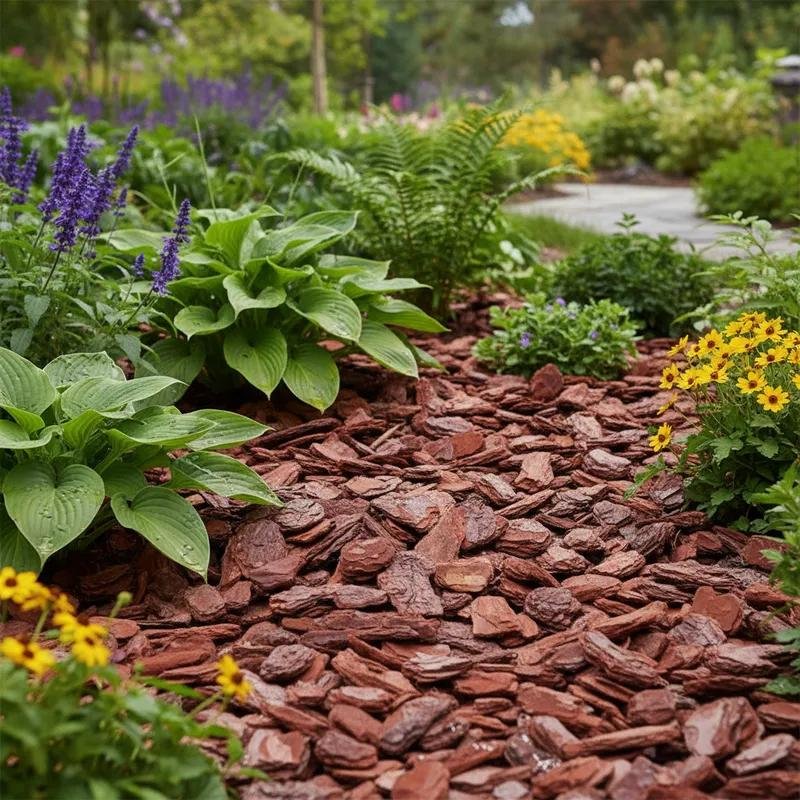
Pine bark has a natural appearance that can give garden beds, planting areas and landscape spaces a clean and finished look.
Where Can You Use Mulch?
Mulch can be used in many different parts of a garden. The right material and particle size depend on the plant and the area where it is being used.
🌳 Around Trees
Mulch can be placed around trees to cover the soil surface and help conserve moisture around the root zone.
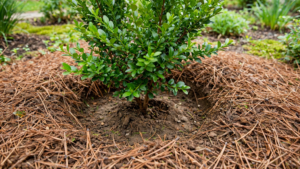
Important: Do not pile mulch directly against the tree trunk. Keep the base of the trunk visible.
🌿 Around Shrubs
Pine bark mulch can be used around shrubs and perennial plants to cover exposed soil and create a natural-looking planting area.
🌸 Flower Beds
Mulch can be spread between flowers and ornamental plants to cover bare soil, reduce weeds and improve the appearance of the flower bed.
🪴 Pots and Containers
Appropriately sized bark can also be used as a top layer in pots and containers. The suitable size depends on the pot and the type of plant.
🏡 Garden Borders & Landscaping
Mulch can be used around garden borders, planting beds and landscape areas where both soil protection and a natural appearance are desired.
How to Use Mulch — Step by Step
Step 1 — Clean the Area
Remove existing weeds and unwanted plant material from the area before applying mulch.
Step 2 — Prepare the Soil
Make sure the soil has adequate moisture before applying mulch. Mulch helps retain moisture, but it does not replace watering.
Step 3 — Spread the Mulch Evenly
Spread the selected mulch evenly over the soil surface. For many garden and landscape applications, a layer of around 2–3 inches can be suitable, depending on the material and application.
Step 4 — Keep Space Around Stems and Trunks
Do not create a mound of mulch directly around plant stems or tree trunks. Keep the base clear.
Mulch should surround the plant, but the base of the plant should remain clear.
Step 5 — Check the Mulch Layer Regularly
Natural mulch gradually breaks down over time. Check the layer periodically and add more when necessary.
Which Mulch Should You Choose?
Different mulch materials have different characteristics. Pine bark mulch is a popular natural option for many garden and landscape applications.
The size of the bark also matters. Fine, medium and coarse bark can be selected according to the plant, pot, garden bed or landscape area.
Common Mulching Mistakes
- Using too much mulch: Avoid creating a very thick mound around plants or trees.
- Covering the plant stem: Always leave space around stems and trunks.
- Ignoring existing weeds: Remove established weeds before applying mulch.
- Using the same size everywhere: Different applications may require different bark sizes.
- Never checking the mulch layer: Natural mulch gradually decomposes and may need topping up.
Final Thoughts
Mulch is a simple gardening material, but when used correctly it can provide several practical benefits. It can help conserve soil moisture, suppress weeds, protect the soil surface, moderate soil temperature and improve the overall appearance of a garden.
Pine bark is one natural mulch option that can be used around trees, shrubs, flower beds, pots and other planting areas, with the appropriate size selected for the application.
Looking for Natural Pine Bark?
Explore MulchingMen's natural pine bark and gardening materials and choose the right size for your plants and garden.
Explore MulchingMen
Recent Comments